Beltane 2008: Scattered Blossoms

May 2nd, 2008

I’m working on a very large post, and normally I would post it in sections, but it’s not the sort of thing that can be broken up. In the meantime, I offer some reflections of the joys of the season:

This morning — May First – out of the blue — our five-year-old son woke up and saw fairies everywhere. Everywhere. He was ecstatic, sitting in bed, watching the tiny things dancing on his blankets, dancing on his pajamas, dancing on his sisters’ heads. He laughed and laughed and laughed! He saw them at school, he saw them on the playground, he saw them at the dinner table… He whispered his secret into his best friend’s ear. “That’s so awesome!” said his friend. At dinner all the kids put a bit of their food into a bowl for the fairies.

Fairy folk are all around
In the trees and in the ground
Gods above we honor you
Be with us in all we do
Ancestors who’ve gone before
Wisdom from the other shore
Offerings we make to you
Fire, water, living wood.

Esmerelda’s weather witching this year has apparently led to a striking result. Look at this map, which shows temperatures for the month of March this year, alongside an in-depth look at the El Nino and La Nina phenomena. Notice in particular that while March 2008 was the second-warmest March ever (beat only by March 2002), and Europe and Asia in particular suffered amazingly high temperatures, North America (where Esmerelda focused her efforts) was pretty much dead-on average — even slightly cooler than average in eastern Canada.

Speaking of weather magic: since we’re deep into 2008 now, it makes no sense to keep offering the 2008 Almanac at full price. It’s now available at 50% off: $9.99 for the print version, $7.00 for the download. Happy Beltane!

After a long winter of silence, I’ve started posting again at the Word of the Day and Druid Journal Meditation blogs.
For the Word of the Day, I put up an analysis of the name Barack Hussein Obama, which was hugely fun to do and uncovered a lot of surprises about the names — and surprises about the man, as well.
For DJ Meditation, I posted a description of one of my daily visualization meditations — no analysis, no rumination, just what I experienced. See what meaning you can draw from it.
This winter I’ve been working on a major project for DJ Meditation, which I hope to unveil very soon. Stay tuned, true believers!

Tomorrow we will have Maypole dances for the small children at school, and this weekend we’ll be going to the big dance at Lady Tiana’s. Anyone else local headed out there?…

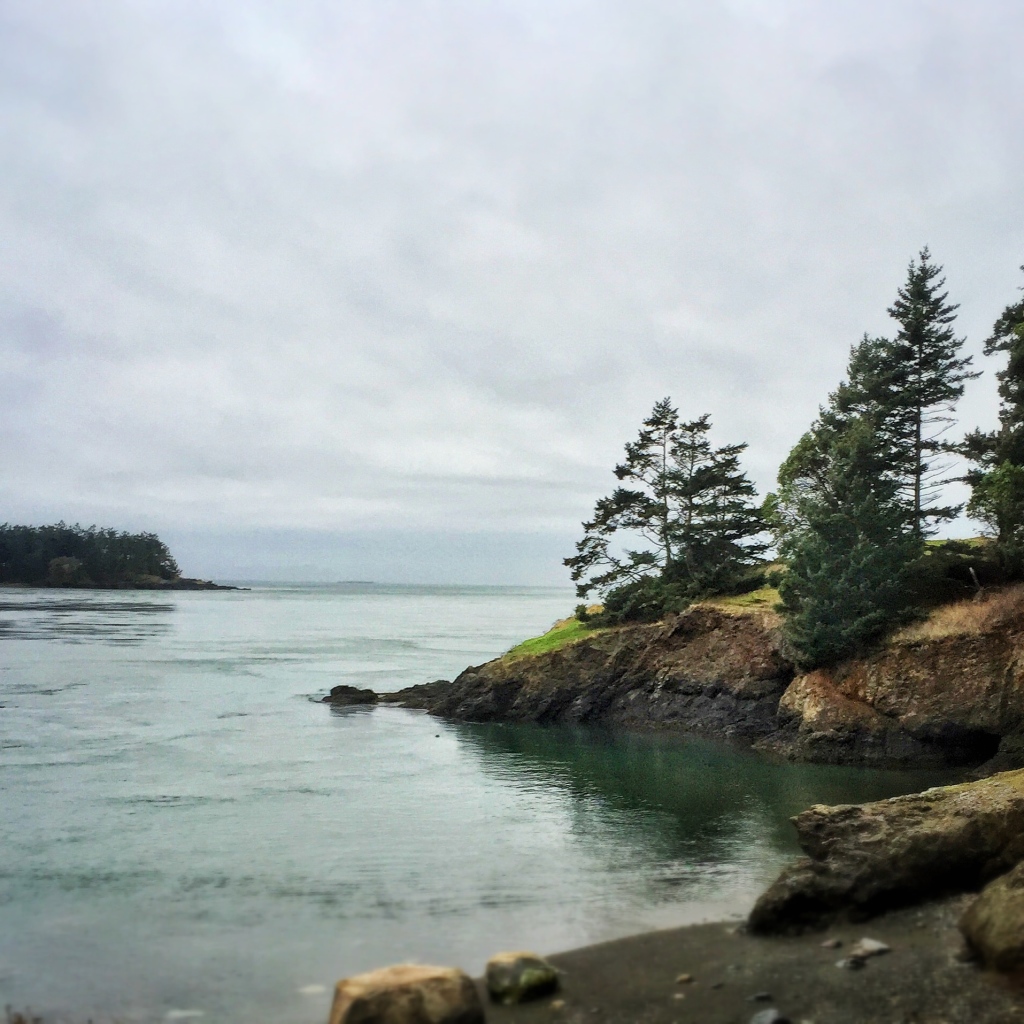
Oh, the green grass and the blooming trees! What greater joy??

beltane2008.jpg

The God’s Whisper: Guest Post from Odin

April 15th, 2008

Since Odin first contacted me back in February, he’s been hovering in the background of my life, making his presence felt, watching, and occasionally offering advice or insight. He has helped me become a better leader and a better father, and is working with me on a number of my personal struggles.

He also told me a story: his own story. I offer here a shortened version, in his own words. In it, he gives an answer to an ancient riddle; and you may judge for yourself the truth of it.

The Riddle

What did Odin himself whisper in the ear of his dead son Balder before he burned on the pyre?

Now Odin strode through the shallows and gripped the gunwale. He climbed into the boat and stood over the body of his dead son. For some time he gazed at him. Slowly he took off his arm-ring Draupnir… and slipped it onto Balder’s arm. Then Odin bent down and put his mouth to Balder’s ear. Again he gazed at his son; then he left [the ship].

At a sign from Odin a servant stepped forward with a lighted brand. He set fire to the pyre and at once a steady plume of smoke, twisting and spiraling, rose into the calm air.

– from The Norse Myths by Kevin Crossley-Holland

What did Odin say? Oddly enough, the first person to ask this question is Odin himself, disguised as a wanderer, in a riddle contest with the wise jotun Vafthrudnir. The loser of the contest wins death. When Odin poses this riddle, “Vafthrudnir looked long at his guest, and recognized him. He said in a low voice, ‘No one can tell what, long ago, you whispered in the ear of your son… I’ve pitted myself against Odin. You will always be wiser and wisest.’” (Crossley-Holland)

No answer to the riddle is given in the Lay of Vafthrudnir, or anywhere else in the Norse sagas. Some suggest that Odin promised Balder resurrection, since the it was foretold that Balder would rise again after Ragnarök to rule Asgard in Odin’s stead. Others say it is impossible to know, and that gods and men will be wondering until the end of time.

Here is Odin’s answer.

(Note: I cannot take strict dictation from him, at least not yet — I frequently get word-for-word phrases from him, but more often I get a gist and a vague indication of length. So while this definitely is a representation of Odin’s poetic style, it’s “noisy”, corrupted by my deficiencies as a medium.)

sealjpg.jpg

Hail to the speaker and him who listens! May whoever learns these words prosper because of them! Hail to those who listen!

– Havamal

I am he

that binds together and breaks apart.

The edges of worlds, in these places I am at home — on the threshold, along the fringe of the forests girdling the villages, far above where the air fades into airlessness. I am he that parts the waters, I am he that distilled the blood of Ymir into the nine worlds. I am the oathmaker, the enforcer, the one that separates, divides, and orders.

Who is the oathbreaker? Who is the smith of lies, the changer of shapes, the twister of promises? He is my blood brother; he is my savior, he is my destroyer. He built a mighty wall that keeps safe my homes, and yet he will fell it. He brought me the Spear of Victory, he brought me my arm-ring Draupnir, and it is his son Sleipnir that I ride in battle; yet he and his children will engulf me and all I hold dear.

Loki! Loki of the tattered smile. He is my blood brother — but he is also my older brother.

They say he is the son of giants: Farbouti (’Anger-Striker’) and Laufey (’Leaf-Island’). But these are just other names for my own parents, Bur (’son’) and Bestla (’tree-bark’). They say he has two brothers, Helblindr (’Hel-blind’) and Býleistr (’Bee-lightning’), but those are just two of my own nicknames.

When the world began –

When the ravenous fire first licked the noxious ice, and old Ymir drank the milk of the soft white cow Audumla, and the first giants and trolls and jotuns and Aesir crept about the edges of Ginnungagap, Loki was there, and my brothers Vili and Ve, and I was there too, and we were numbered three.

Loki was there when we slew Ymir — mighty and terrible and foul he was. Ymir we slew, Loki and Vili and Ve and I. And it was we three who slew him.

Then we built mountains from Ymir’s long bones, and shattered other bones into rocks and stones, and made soil from his flesh and the waters from his blood and raised up his vast vaulted skull to make the sky, we three, Loki, Vili, Ve, and I.

Enough mystery! You’ve guessed the riddle by now. Loki and I were one man. But in that most ancient time, it would be truer to say that only Loki was there; I was just a shadow of doubt in Loki’s wild young heart.

The stories say

that Vili, Ve, and I fashioned Asgard and made it a place of green grass and shining palaces, and erected the Rainbow Bridge to connect it with Midgard.

But the way I remember it, we gods built humble homes in the mountains between Midgard and Jotunheim, for we were friends with men and jotuns, and ruled over none; and there was much coming and going and commerce and mixing between us. But there was also strife, feuding between families, and black treachery.

The stories say that the Aesir and the Vanir fought a great war and Asgard’s walls were reduced to rubble; and the war ended in stalemate, and following the custom of the time, members of each tribe were sent to live with the other to ensure peace thereafter.

But the way I remember it, there was mixing and muddying of bloodlines, and shifting of alliegances, and distrust grew among all the Aesir, Vanir, and jotuns.

The stories say that the Aesir made a deal with a jotun to rebuild the wall of Asgard, and Loki tricked the stonemason into building it for free, and Loki joined with the jotun’s mighty workhorse and birthed Odin’s steed, Sleipnir.

But the way I remember it, Loki tricked the stonemason into building a great fortress for himself and his family, he and Angrboda and his three monstrous children, and his second wife Sigyn and her children, and Frigg and hers, and Freyja and hers, and the mistresses that came and went with each moon. Sleipnir was born indeed, but so were Hel and Fenris and Jormungandr, and many other children, grotesque and malformed half-beasts, terrible to look upon.

The stories say that I, Odin, climbed Yggdrasil and hanged myself from it, a sacrifice of myself to myself, for nine days and nine nights, until the wisdom of the runes were revealed to me.

But the way I remember it, Loki did not seek wisdom, and Mimir and the other wise jotuns did not have the courage to seek the deep knowledge of the tree; so the magic of the runes was unknown to all.

The stories say that the Norns advised the gods that the children of Loki would bring ruin on the world; and Odin sent Hel to Niflheim to look after the dead, and tossed Jormungandr into the ocean to become the Midgard Serpent, and Tyr sacrificed his hand so that the mighty wolf Fenris could be bound until Ragnarök.

But the way I remember it, Loki would not suffer his children to be treated in such a way. So Hel lived in her father’s castle, and the dead walked the earth without rest. And the Jormungandr grew and grew and ravaged the countryside with his brother Fenris, hunting at will, and even Loki could not control them.

The stories say that Idunn lived in Asgard and cared for the golden apples of youth, which kept the gods young forever.

But the way I remember it, the apples were argued and fought over and hoarded by many wrangling gods and jotuns, and many were immortal who would better have died, and many died who should have lived for ages.

The stories say that the great treasures of the gods — Odin’s Spear of Victory, Freyr’s golden boar, Thor’s hammer, and many others besides — were made by dwarves who were goaded into a treasure-crafting contest by Loki, to repay his theft of Sif’s golden hair.

But the way I remember it, Loki frequently visited the dwarves and cajoled them into making treasures and weapons for himself and his family; and he and his brood were a scourge of terror on the earth.

The way I remember it…

Midgard was a place of darkness and chaos.

There was no poetry, no art, no gentle rains or green grass; the sun and moon were erratic in their dances, and the seasons came and went as they would — spring now following fall, now preceding it; and summer passing suddenly into frightful winter. It was a world without oaths, without promises, without binding or cohesion. There were no edges, no borders; there was no separation, no division. All flowed together in a cacophony of strife and destruction.

There were patches of light, to be sure. Balder’s home among the highest, whitest peaks of Midgard was a haven of golden peace, though he had no skill in protection or politics, and one day he was murdered in his sleep. Thor was mighty and noble, but fell in with friends who twisted his heart and led him to darkness. Good times we had, great feasts and games and camaraderie, once in a while; but in the next moon, oaths of friendship were broken, and those that had dined together would slit each other’s throats.

The stories say that Ragnarök was the final conflagration, the age of axes and swords and shields asunder. All bonds were broken, all oaths were forsworn, all promises abandoned. Loki and Fenris broke their fetters, the dead were released from Hel, and the Midgard Serpent rose from the sea. Bifrost was broken and battle was joined for the last time; and all ended in fire and water.

But the way I remember it, there was no sudden ending, no breaking and loosing; for the bonds and fetters had never been put in place. Eon after eon passed, each one worse than the last; battle piled on battle, war piled on war, treachery on treachery, famine on famine, plague on plague, death piled upon death. Loki wrangled and wheedled and argued and fought for his castle, his children, and his wives, and lost them one by one. Mountains were leveled and seas raised up; the sun and moon struck each other and fell into the sea; and when black Surt came with his sword of fire to end all at last, there was but one soul left to draw breath: Loki.

Crippled and half-dead

he watched from a cave of safety as the fire licked from Surt’s sword and began to boil the seas. Anger burned in him, but also regret; for he saw how his greed, lust, and short-sightedness had destroyed the world he had made with his brothers. The shadow in his heart, the self-doubt that was Odin, had slowly grown stronger as the world had aged, and at last overcame him as the end drew close.

Loki the Shape Changer! This time his burning will reached out and changed the shape of time.

Yggdrasil’s branches became roots.

Its roots became branches. Dragon became eagle, and eagle, dragon; the cock swallowed its cry; the blood and flesh of Ymir drew itself together and rose again, a living giant blotting out the sky; and reaching out in his pain and hatred, he battled blackened Surt.

All then fell dark –

And when the world began again

When the ravenous fire licked the noxious ice, and old Ymir drank the milk of the soft white cow Audumla, and the first giants and trolls and jotuns and Aesir crept about the edges of Ginnungagap, Loki was there, and my brothers Vili and Ve, and I was there too, and we were numbered four.

A second chance was made, and I, Loki, who is now Odin, became he that binds together and breaks apart. I parted the waters, and distilled the blood of Ymir into the nine worlds. I am the oathmaker, the enforcer, the one that separates, divides, and orders.

For a time there is green grass, and promises kept, and life and love in the sunlight.

But the price is terrible.

Loki, my older brother, myself who is closer than kin, is reduced to a trickster, a treacherous conniver. At the end his bitterness shall overcome him, and he shall cause the death of my son Balder; but this is no fault of his — the fault is mine. I who placed everything in its proper place, I had no place for him. His heart was not wholly evil, but it was twisted and delighted in power and cleverness. I could not cast him out of Asgard, I could not kill him — how could I reject myself so utterly? And so he became a poison that slowly strangled my stronghold.

So the fault is mine that Balder dies, as surely as it were my hand on the spear. I set myself to preserve the good in the world, to protect it from the evil; but I shall fail. And when my good son is placed on the pyre, I shall kneel at his side, and give him my sign of kingship, and whispering, beg his forgiveness.

And last, when the new sun rises beyond Ragnarök, the world will go on without oaths, without promises. There will be no breaking apart, nor gathering together; the waters will mix with the fires and the good mix with the evil. Asgard shall stand with no walls.

And yet, under Balder, it shall stand.

godswhisper.jpg

A Crime in Our Names: Iran

March 31st, 2008
“You may say this to Théoden son of Thengel: open war lies before him… None may live now as they have lived, and few shall keep what they call their own.”– Aragorn, speaking to Éomer on the eve of the War of the Ring; from J.R.R. Tolkien’s The Two Towers

A month ago, my wife attended a town meeting here in Hadley, Massachusetts, concerning prevention of war with Iran. The meeting was sponsored by a number of local organizations, including the Order of the White Oak. Given the events in the last few weeks, which appear to be bringing us closer and closer to war, we felt it essential to distribute this information as widely as possible.

These are the notes my wife took at the meeting. Read the rest of this entry »

The Future of Neopaganism in the West, Part II: Going Organic

March 27th, 2008

In the previous post, I outlined a model of prestige and stigma which predicts whether a language or religion will grow or wither in a society. Now let’s take the prestige/stigma model and look at Neopaganism today. By these measures, Neopaganism is in trouble.

Stigmatized Neopaganism

Imagine trying to revive the Latin language. Imagine speaking it at home, teaching it to your children, seeking out Latin translations of modern works, and using it instead of English whenever you could. What would your friends and neighbors think? Do you think lots of people would jump on the bandwagon with you? Do you think that the revived Latin movement — “Neolatinism” — would have much of a future in your society? There are no celebrities speaking Latin on TV. There are no government officials speaking Latin in press conferences. Latin is stigmatized as a dead language with no future; why would anyone want to learn it?

If the analogy between religion and language holds, Neopaganism is in exactly the same situation as Neolatinism would be. Read the rest of this entry »

The Future of Neopaganism in the West, Part I: Prestige and Stigma

March 19th, 2008

Modern religions that are derived from or inspired by the indigenous polytheistic traditions of Europe (I’ll call them Neopagan) have experienced a great resurgence in the last couple of hundred years, and especially in the last fifty or so. This is surprising, because prior to that, everyone pretty much thought they were gone for good. Read the rest of this entry »

Interview with Frank MacEowen: Moving Beyond Labels

March 8th, 2008

If you’ve been reading here a good long while, you remember my review of The Mist Filled Path, a book by Frank MacEowen that struck my life with great force a year and a half ago. Frank’s message came to me at just the right time, and I found that it resolved a lot of issues with the direction of my spiritual path, as well as laying down rich soil for growth. Perhaps the most profound gift the book gave me was a deepening of my sense of comfort and rightness in the label ‘druid’, which I had adopted as my own just a few months before, and the path circumscribed by that term.

But people are not labels, as Frank makes very clear by his own example. His path has wound among Zen Buddhism, shamanic studies, Celtic spirituality, and Jungian psychology, with a dash of poetry thrown in. He has undergone the ’shaman sickness’, participated in the Lakota Sun Dance, and slept alone in burial mounds in Scotland, listening to the song of the world.

Frank’s latest book, The Celtic Way of Seeing: Meditations on the Irish Spirit Wheel, is vastly different from The Mist Filled Path. The latter is a journeyman’s chronicle, a spiritual travelogue; but The Celtic Way of Seeing is a great map of the soul. Frank looks at the ancient divisions of Ireland, and the connections between that sacred physical space and the sacred spiritual space within us. It’s a book that packs a lot of punch, especially for those of us inclined to think in terms of maps and landscapes. I’ll be writing a full review soon.

In the meantime, I’m absolutely ecstatic to present this interview with Frank, in which he very graciously opens himself up with characteristic insight and honesty on all kinds of topics. I asked Frank five questions, and I’m going to present four of them here; the fifth I’ll save for the review of The Celtic Way of Seeing, since it will make more sense in that context. And now I’m going to scurry out of the way and let you jump right into the interview! Read the rest of this entry »

Merry Meetings: Guest Post on the Meet a Guide Meditation

February 28th, 2008

Peter Ó Gamhna first contacted me a few months ago, to share his experiences with the free guided meditation “Meet a Guide”. He found himself talking to an entity that identified himself as Apollo… but who seemed a bit “distant” and definitely did not take on Apollo’s classic appearance! Since then Peter’s journey with meditation has been a remarkable one, and I encouraged him to write it up so that we could share it with you here. Meditation isn’t for everyone, but for myself and many others, it’s been an amazing path!

Hello,

My name is Peter Ó Gamhna. Jeff has given me the wonderful chance to write a guest post for his highly successful blog, one which I have eagerly accepted. I’m going to be discussing visualisation meditations, sharing my experiences and thoughts with you the reader – it is my hope that in doing so I might inspire a few of you to give it a try yourself, or simply satisfy your curiosity about the matter. Read the rest of this entry »

The Tolkien Tarot Spread III: Fiction and Divination

February 21st, 2008

What does fiction have to do with divination?

The common thread is the story structure, the plot. A work of fiction is an illustration of prototypical event structures, plotlines that are moving or meaningful. A divination system also provides plotlines, as well as general elements to flesh out the events of the story. A divination system shows you a possible plot line for your own personal story; it allows you to construct a tale to make sense of your life.

A Tarot spread can be thought of as a narrative structure upon which you can hang the life events surrounding the theme of your reading. The classic three-card reading — past, present, future — is just about as basic a narrative structure as one can imagine. The Celtic Cross is an elaboration of that basic narrative, showing obstacles, influences from ‘above’ and ‘below’, etc. Diane Sylvan has a marvelous spread (the Storyteller) that echoes Campbell’s journey of the hero. The Tetractys spread, which I learned of while researching this article, is a fascinating one that I’d love to try sometime, and seems to combine four plot patterns into one.

The Tolkien spread uses Tolkien’s favorite six-part plot pattern, which I explain in detail in the previous post; it underlies most of the action of The Lord of the Rings, as well as the overall arc of the novel itself. It illustrates Tolkien’s primary theme, eucatastrophe — the sudden twist, unexpected and yet intimately bound up with the framework of the tale, that brings the story to a positive conclusion. Read the rest of this entry »

Hanged God Calling on Line One: an Unexpected Interview

February 17th, 2008

Some time ago I promised my wife I would stop meditating in the car. I was sorry to do it, because some of my very best meditations happened then, but I understood her concern. I’m willing to concede that perhaps deep meditation is not really safe at 70 miles per hour…

But on Tuesday I broke my promise. It wasn’t my fault, though — I swear! I was driving along, minding my own business, and a spirit quite firmly forced himself into my full meditative attention. Here’s how it happened. Read the rest of this entry »

The Tolkien Tarot Spread II: Patterns of Action

February 14th, 2008

Click here for the previous post in this series: The Function of Fiction.

Patterns of Plot, Patterns of Life

All that is gold does not glitter,
Not all those who wander are lost.
The old that is strong does not wither;
Deep roots are not reached by the frost.
From the ashes a fire shall be woken,
A light from the shadows shall spring;
Renewed shall be blade that was broken,
The crownless again shall be king.

Tolkien

One way in which fiction influences our subconscious thinking is in its very structure, its plot. Different authors and different works have different plot styles and devices, sometimes woven carefully and consciously (The Quincunx), other times written on the fly with almost no forethought (Louis L’Amour). These patterns of plot can influence the way we, as readers, try to organize our own experiences — the way we make sense of our own stories. We come to expect our lives to unfold in the same way that our favorite fiction does. Read the rest of this entry »