fiction
-
Crown of Crows: A Meditative Journey Writing Fantasy

The act of writing, I believe, operates directly on our subconscious, working with symbols that hold meaning beyond our conscious understanding. When you write, you’re not just telling a story; you’re engaging in trance-work. Continue reading
-
Archetypes of the Witch I: Transformer at the Edge
In my previous posts on the the Archetype of the Druid, I trace my personal journey. Literary figures (Gandalf, Merlin, Sherlock Holmes, and Hari Seldon) shaped my intuitive understanding of the kind of person I wanted to be, and (along with guidance from community and Spirit) ultimately led me to find Druidry in the modern… Continue reading
-
Archetype of the Druid I: Encounters at the Edge of Druidry
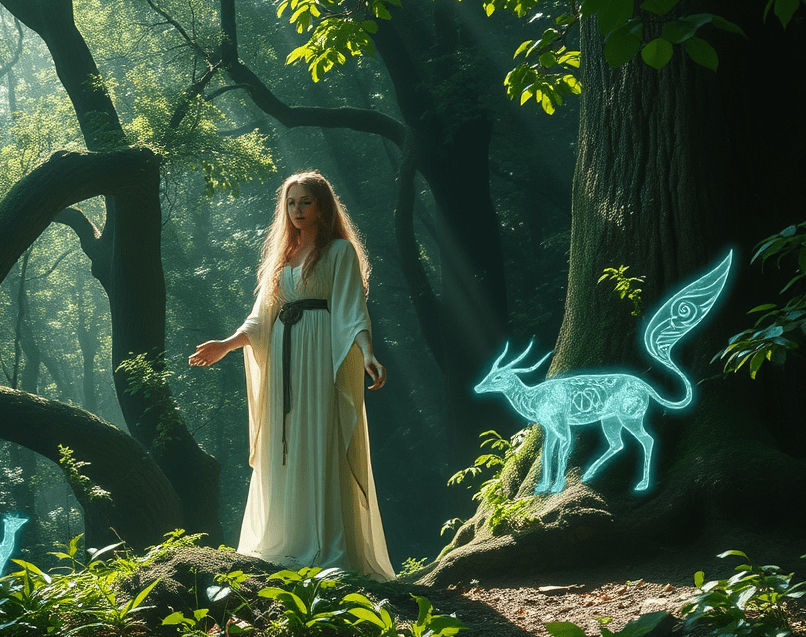
How literature shaped my conception of the Druid. And my conception of the self. Continue reading
-
The Tolkien Tarot Spread II: Patterns of Action
Click here for the previous post in this series: The Function of Fiction. Patterns of Plot, Patterns of Life All that is gold does not glitter, Not all those who wander are lost. The old that is strong does not wither; Deep roots are not reached by the frost. From the ashes a fire shall… Continue reading
-
The Tolkien Tarot Spread I: the Function of Fiction
There is no question that Tolkien has had an amazing effect on my life, perhaps more than any other single person, including my parents. I am a linguist today because of The Hobbit. The runes absolutely fascinated me. And then — The Lord of the Rings! Can you imagine the thrill that shot through me… Continue reading
About Me
Word, Card, and Star – a journey through language, divination, and inspiration. A chronicle of my search for guidance, insight, and a connection to nature and the ancient world. Along the way, I hope to discover beauty, connection, groundedness, and a sense of wonder.

Recent Posts
Newsletter
Pages
categories
- Abundance
- Ancestors
- Arguments Against Religion
- Astrology
- Atheism
- Christianity
- Consciousness
- Defining Paganism
- Druidry
- Ethics
- Etymology
- Fiction
- Fire Festivals
- Futurism
- Gods
- Guides
- Health
- History
- How to Choose a Religion
- Inner Landscapes
- Language
- Literature
- Magic and Manifestation
- Meaning
- Meditation
- My Favorite Meditation
- Paganism
- Philosophy and Religion
- Politics
- Products
- Reconciling Dreams and Reality
- Relationships
- Religion
- Religion and Magic
- Ritual
- Selling Salvation
- Society
- Sun Festivals
- Tarot
- The Great Bear
- The Structure of Consciousness
- Tolkien Tarot Spread
- Trees and Nature
- Uncategorized
- Word and Spirit
- Writing
- Zen
- Zen and Tarot


 Druid Journal